
Japan and Asia's Low Birthrate Problem
Proposing policies centered on work-style reform to tackle low birthrates and build an environment conducive to family formation.
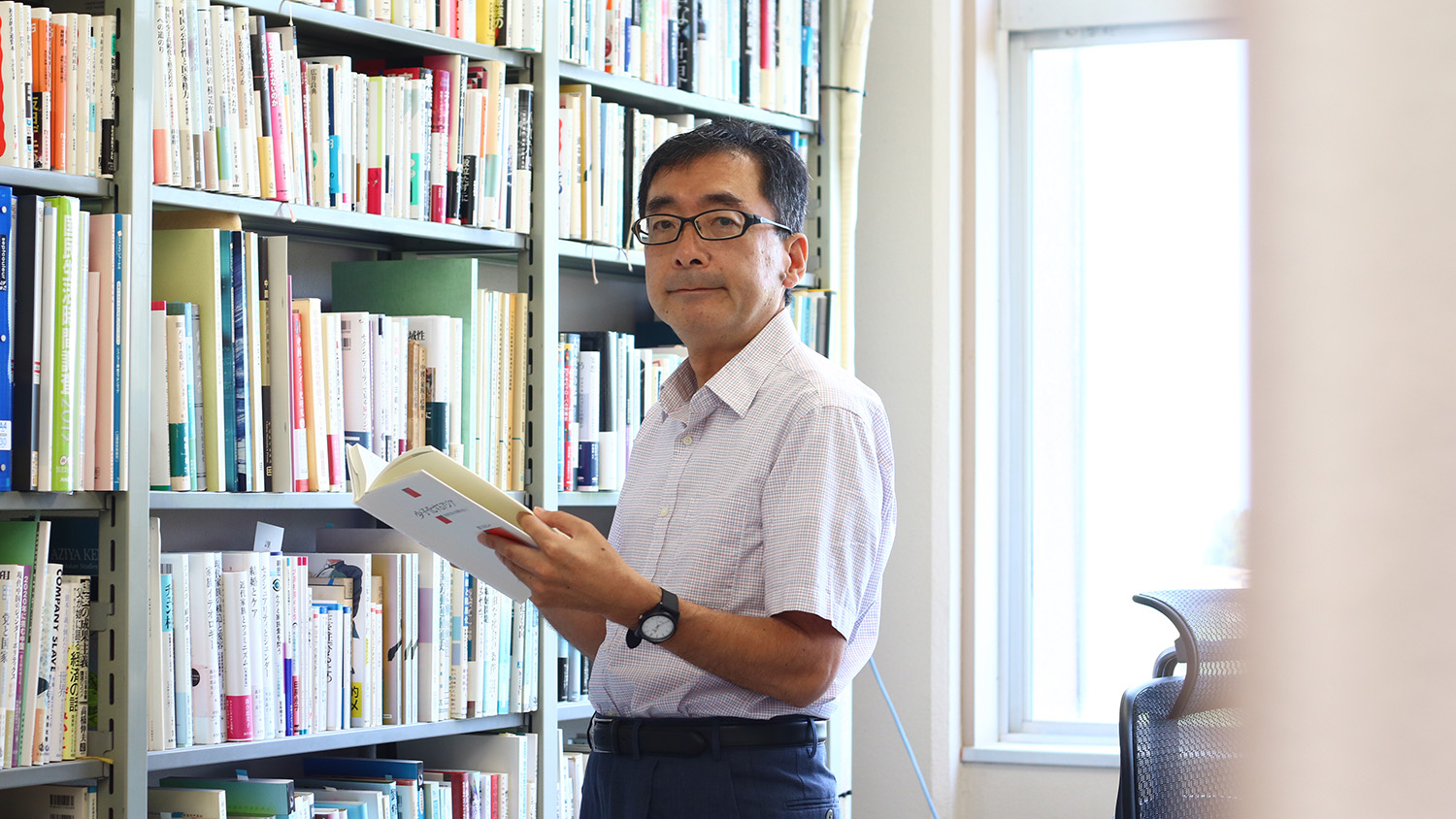
One of Japan's serious problems is its declining birthrate. The total fertility rate in 2024 reached 1.15, setting a new record low. Furthermore, many East Asian countries face “ultra-low fertility rates,” values that are exceptionally low even globally. Professor Mizoguchi Yuuki examines the commonalities in East Asia's declining birthrates and works on analyzing the causes and developing countermeasures.
“Focusing on Japan, China, and South Korea reveals that the low birth rates stem from societal structures centered on the accumulation of capital. Simultaneously, we observed that all three nations face difficulties in family formation, meaning a situation where ‘having a family=hardship.’ To understand the nature of this hardship, we are examining the costs of family formation, particularly childcare expenses, comparing them internationally to explore the causes of Japan's declining birthrate and develop countermeasures.”
Family formation costs are measured by three elements: 1. monetary costs (childcare expenses, education costs, etc.), 2. opportunity costs (lost income due to career interruptions, etc.), and 3. income. Research into the trends of each revealed a common finding across all countries: family formation costs are increasing.
“In Japan, the rise in female employment rates has increased factor 2, in China, market economy reforms triggered a sharp increase in factor 1, and in South Korea, factors 1 and 2 were compounded by the destabilization of factor 3 among men. While differences exist, overall family formation costs have risen, contributing to low birth rates in each country. The rise in family formation costs indicates that the cost-benefit ratio of marriage has deteriorated. This situation is thought to lead to more young people hesitating to marry, contributing to non-marriage and delayed marriage, which in turn are factors in the declining birthrate."
Professor Mizoguchi currently is taking part in policies to address the declining birthrate in collaboration with local governments, while also actively advocating for necessary countermeasures through seminars and other activities. Promoting work-style reform is key to restoring Japan's birthrate.
“While expanding child allowances and childcare facilities is important, research indicates that reducing weekly commuting time by six hours would be more effective, with some companies seeing their internal birth rates increase fivefold after implementing work-style reforms. I personally advocate for aiming for ‘a seven-hour statutory workday with no overtime’. The crucial point is shifting to a social structure centered on human social reproduction. I intend to continue advocating both domestically and internationally for the realization of societies where those who wish to marry can do so easily and have as many children as they desire.”
少The declining birthrate is called a “quiet emergency” because it deteriorates economic strength and even shakes the foundations of the social security system. To overcome this situation, the widespread adoption of work-style reforms is eagerly awaited.
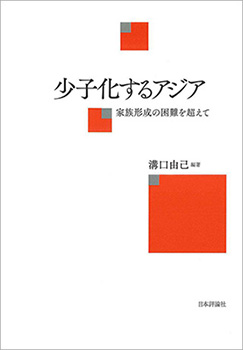
(translation: Asia's Declining Birthrate: Overcoming Challenges in Family Formation) authored by Professor Mizoguchi Yuuki
Profile
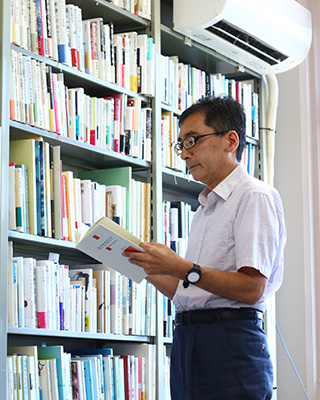
MIZOGUCHI Yuuki
Ph.D. (Economics). Specializes in the Chinese economy. Researches factors contributing to declining birth rates in Japan and other East Asian countries. Project leader for the “Platform Development for Countermeasures Against Declining Birth Rates in Collaboration with Local Governments” at the University's Asian Link Research Center. Author of Asia's Declining Birthrate: Overcoming Challenges in Family Formation among others.
Beyond the University
Professor Mizoguchi, who advocates for a goal of “7-hour statutory workdays with no overtime,” himself returns home in the evenings to do household chores and cherishes time with his family.
While studying in China, he obtained a national certification as a Chinese cuisine chef; his specialty is steamed fish.

*Article content and profile information are current as of October 2025.
Related Links
Tags (Keywords)
Publication
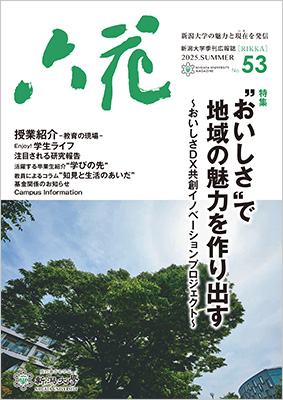
This article is also featured in Rikka, Niigata University’s quarterly public relations magazine, No.53.
Read other articles
-
 Faculty's Column (Early-Career) January 27, 2026
How Today’s Students Are Making Their College Years Count
TAKASAWA Yojiro Assistant Professor of the Faculty of Economic Sciences -
 Research (Rikka) November 28, 2025
Production of High‑Purity Hydrogen and Basic Chemicals via High-Efficiency Biomass Conversion
Li Liuyun Assistant Professor, Faculty of Engineering -
 Faculty's Column (Early-Career) November 27, 2025
Microparticles Show Mysterious Connections whthin the Body
OHKURA Naoto Senior Lecturer, Operative Dentistry and Endodontics, Niigata University Medical & Dental Hospital