
Identification of USP10 protein that initiates the pathological aggregation of Tau protein, the causative factor for Alzheimer's disease
July 24, 2019
Alzheimer's disease is the most common form of dementia. Tau is the causative factor of Alzheimer's disease, and Tau aggregation in neurons is the hallmark of the disease. A team of researchers at Niigata University Graduate School of Medical and Dental Sciences has discovered that USP10 protein initiates Tau aggregation in neuronal cells exposed to stress. The researchers also found that USP10 is a component of Tau aggregates in neurons of Alzheimer's diseases. These finding suggested that USP10 plays a causative role in the development of Alzheimer's disease. Therefore, USP10 is a promising drug target for the treatment of Alzheimer's disease.
Publication Details
Title: USP10 is a critical factor for Tau-positive stress granule formation in neuronal cells
Journal: Scientific Reports
Authors: Svetlana Piatnitskaia, Masahiko Takahashi, Hiroki Kitaura, Yoshinori Katsuragi, Taichi Kakihana, Lu Zhang, Akiyoshi Kakita, Yuriko Iwakura, Hiroyuki Nawa, Takeshi Miura, Takeshi Ikeuchi, Toshifumi Hara, Masahiro Fujii
DOI: 10.1038/s41598-019-47033-7
More News
-
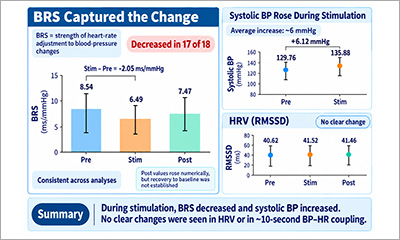
A New Clue for Assessing the Body’s Response to Mild Electrical Stimulation of the Ear: Changes in Heart Rate Regulation Observed in 17 of 18 Participants
Research results
-
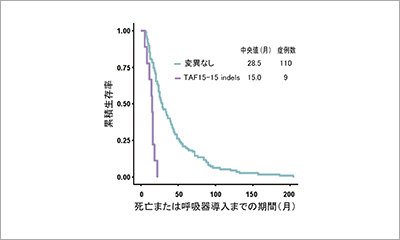
Insertion or deletion variants in TAF15 exon 15 are genetic factors impacting the prognosis of amyotrophic lateral sclerosis in a Japanese cohort
Research results
-
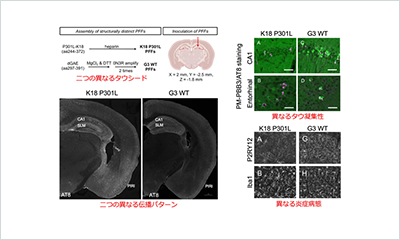
Distinct recombinant tau fibril conformations induce divergent propagation and neurodegenerative phenotypes in a model mouse
Research results
-
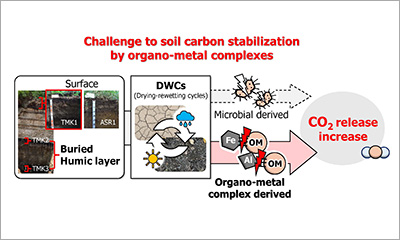
Metal-organic interactions identified as a key factor in carbon cycling, improving predictions under climate change
Research results