
How Light Exposure Creates the Light Purple Hue of Toad Lily Tepals: Mechanism Behind the Background Collar Formation of Tepals Revealed
May 11, 2026
The tepals (petals) in the Tricyrtis species of the lily family exhibit random dark reddish-purple spots on a light purple background, and the mechanism underlying the light purple background coloration has finally been discovered. A research group led by SHINOKU Yuta, a master’s student (at the time of the research) in the Graduate School of Science and Technology, Niigata University, Associate Professor OTANI Masahiro, and Professor NAKANO Masaru of the Faculty of Agriculture, Niigata University, revealed that the background color formation in response to light, and identified the gene that controls this background color formation. These findings will contribute to understanding how flowers coloration response to light and is expected to have future applications in molecular horticultural breeding.
This research was published in Scientific Reports on March 28, 2026.
Key points
- We discovered that the background coloration in the tepals in the Tricyrtis species is formed in a light-dependent manner, whereas the spotted pattern is formed independently of light.
- We identified a gene that controls background color formation through shading experiments on flower buds, gene expression analysis, and transformation experiments.
- Our findings contribute to elucidating the mechanisms underlying flower coloration and color pattern formation, and are expected to have applications in molecular breeding of horticultural plants.
Publication Details
Journal: Scientific Reports
Title:Identification of an R2R3-MYB gene regulating tepal background coloration in Tricyrtis sp.
Authors:Yuta Shinoku, Ichiro Kazama, Yusuke Kanemaki, Mai Shibuya, Kakeru Inagawa, Julia Ono, Masaru Nakano, Masahiro Otani
Doi: 10.1038/s41598-026-46254-x
More News
-
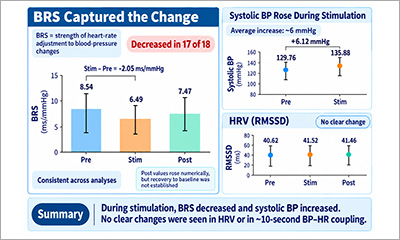
A New Clue for Assessing the Body’s Response to Mild Electrical Stimulation of the Ear: Changes in Heart Rate Regulation Observed in 17 of 18 Participants
Research results
-
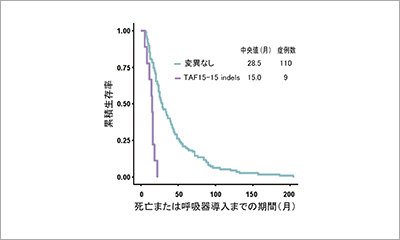
Insertion or deletion variants in TAF15 exon 15 are genetic factors impacting the prognosis of amyotrophic lateral sclerosis in a Japanese cohort
Research results
-
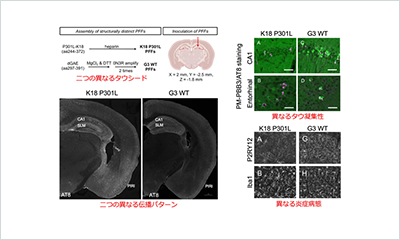
Distinct recombinant tau fibril conformations induce divergent propagation and neurodegenerative phenotypes in a model mouse
Research results
-
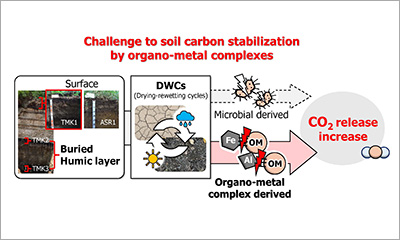
Metal-organic interactions identified as a key factor in carbon cycling, improving predictions under climate change
Research results