
A novel diagnostic marker for an ischemic stroke subtype with difficulty in differential diagnosis
April 15, 2020
The research group led by Contract Assistant Professor Itaru Ninomiya, and Associate Professor Masato Kanazawa of Department of Neurology, Brain Research Institute, Niigata University, has demonstrated for the first time that the levels of an inflammatory protein, pentraxin 3 (PTX3), are elevated during the hyperacute phase of branch atheromatous disease (BAD)—an ischemic stroke subtype—and have the potential as a diagnostic biomarker. BAD, often associated with serious sequalae, presents early symptoms that are similar to lacunar infarction (LI), therefore is extremely difficult to differentiate. Moreover, unlike LI, exacerbation of BAD commonly occurs despite treatment initiation, and early differentiation of BAD might significantly contribute to the development of treatment strategies.
Further details of the discovery of this novel diagnostic marker for ischemic stroke, associated with difficulty in differential diagnosis, were published on April 6, 2020 (Japan time), in the European Journal of Neurology.
Publication Details
Title: Elevated serum pentraxin 3 levels might predict the diagnosis of branch atheromatous disease at a very early stage
Journal: European Journal of Neurology
Authors: Itaru Ninomiya, Masato Kanazawa, Masahiro Uemura, Osamu Onodera
DOI: 10.1111/ene.14249
More News
-

Mapping Potential Conflict Zones Between Offshore Wind Development and Little Terns Across Japan: A New Spatial Screening Framework to Support Environmental Impact Assessment
Research results
-
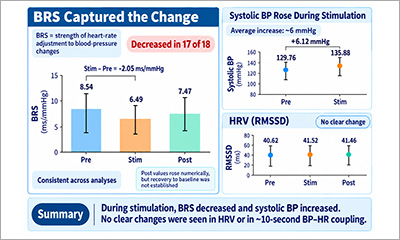
A New Clue for Assessing the Body’s Response to Mild Electrical Stimulation of the Ear: Changes in Heart Rate Regulation Observed in 17 of 18 Participants
Research results
-
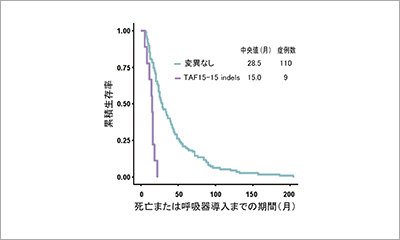
Insertion or deletion variants in TAF15 exon 15 are genetic factors impacting the prognosis of amyotrophic lateral sclerosis in a Japanese cohort
Research results
-
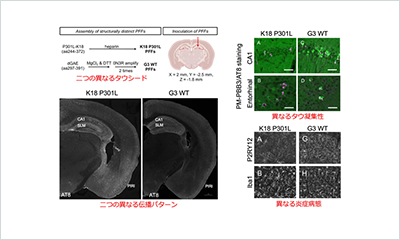
Distinct recombinant tau fibril conformations induce divergent propagation and neurodegenerative phenotypes in a model mouse
Research results