
Research in Forests for Over 30 Years Published Open Access
June 02, 2020
Professor Hitoshi Sakio, Director of the Sado Island Center for Ecological Sustainability, has been studying forest ecosystems for over 30 years to obtain insight into the long-term dynamics of the global environment. In May 2020, he published "Long-Term Ecosystem Changes in Riparian Forests" with open access in order to disseminate his research around the world.
This book summarizes his research for over 30 years at the research site of the riparian forest in the Chichibu Mountains in Saitama Prefecture. The research site is registered in Monitoring Sites 1000 Project by the Ministry of the Environment. In addition to explaining the life history and coexistence mechanism of trees distributed in the riparian forests based on his field research results, the book also clarifies that insects and birds are changing in the environmental chain because vegetation has decreased due to the increase of Japanese deer.
He published the book open access to be of help, even if a little, at this time when COVID-19 is restricting researchers all over the world. The book is for those involved in higher education to read as well as anyone who is interested in forests and the environment.
Visit the following website to download the book:
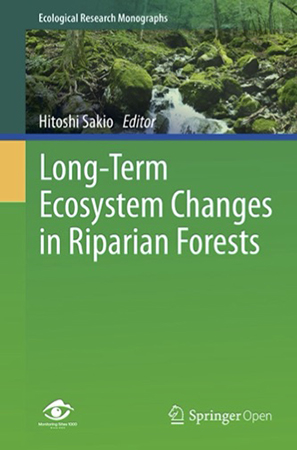
"Long-Term Ecosystem Changes in Riparian Forests" (Springer Link)
Editor: Professor Hitoshi Sakio (Director of Sado Island Center for Ecological Sustainability)
Issued by: Springer
More News
-

Mapping Potential Conflict Zones Between Offshore Wind Development and Little Terns Across Japan: A New Spatial Screening Framework to Support Environmental Impact Assessment
Research results
-
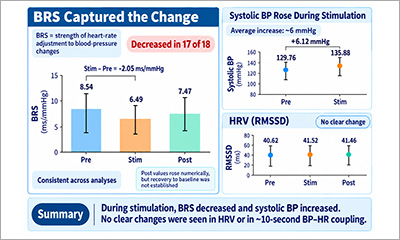
A New Clue for Assessing the Body’s Response to Mild Electrical Stimulation of the Ear: Changes in Heart Rate Regulation Observed in 17 of 18 Participants
Research results
-
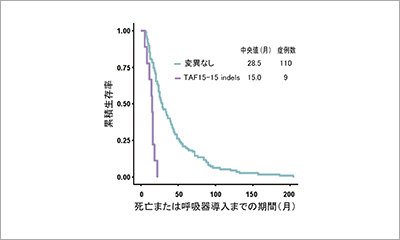
Insertion or deletion variants in TAF15 exon 15 are genetic factors impacting the prognosis of amyotrophic lateral sclerosis in a Japanese cohort
Research results
-
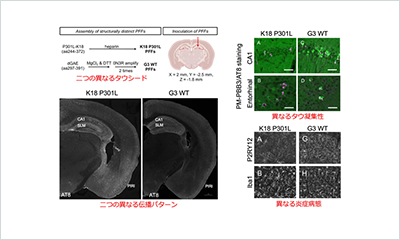
Distinct recombinant tau fibril conformations induce divergent propagation and neurodegenerative phenotypes in a model mouse
Research results