
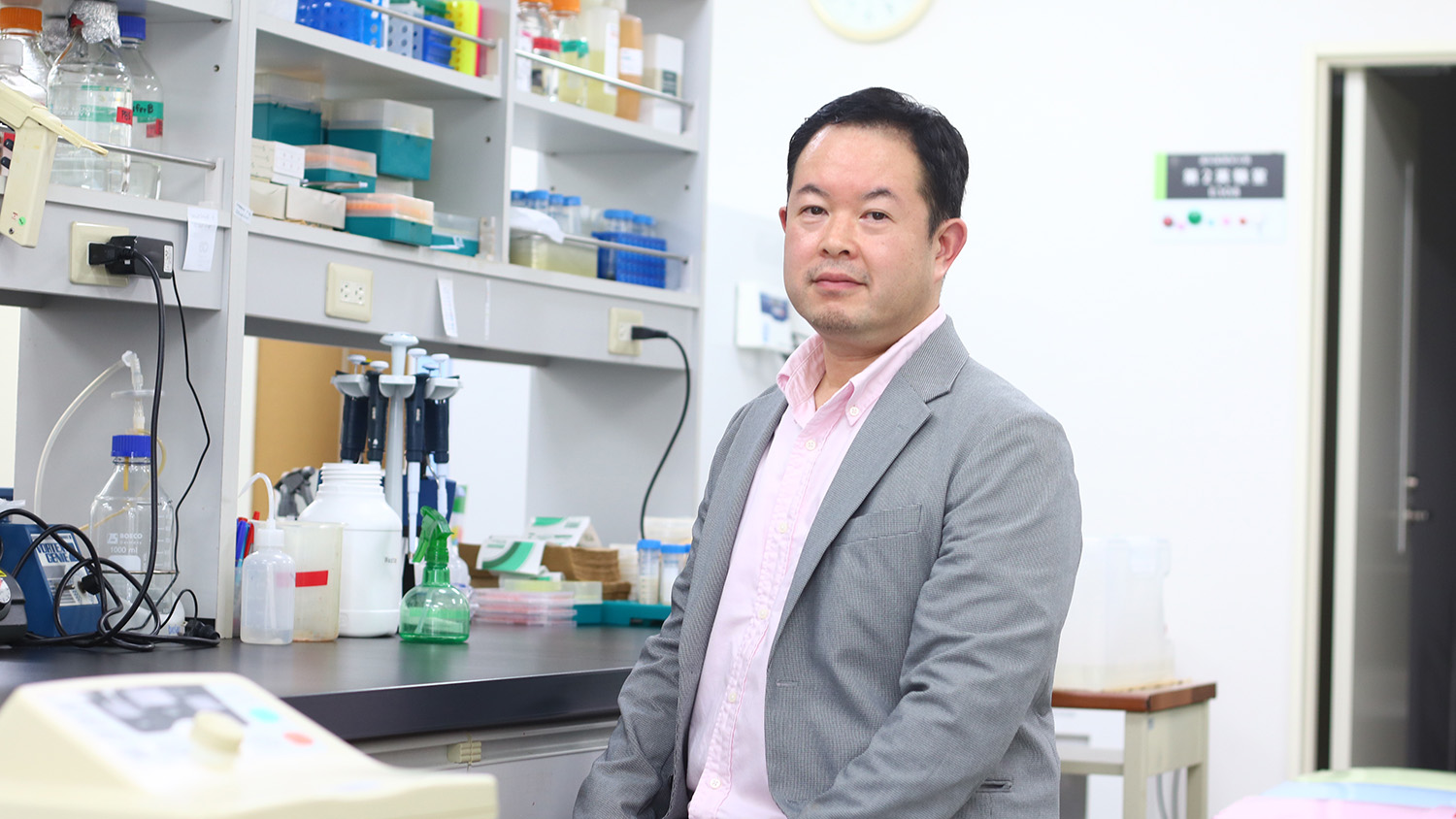
Research on Sake Lees Upcycling: Creating New Value for Health and Local Community
Exploring new possibilities for sake lees to help extend healthy life expectancy and highlight the appeal of the region.
In Japan, which is often referred to as a super-aged society, the number of people with osteoporosis continues to rise. Assistant Professor Kakihara conducts research to identify beneficial components in foods and study their effects. He aims to develop new functional food products that are able to help prevent osteoporosis.
“While studying various food ingredients, I decided to focus on sake lees, which is highly nutritious and has long been said to promote health and beauty. I am currently investigating the beneficial components found in sake lees and exploring what effects they could have on bone metabolism and health promotion.”
Osteoporosis is a condition in which, as people age, bones become brittle due to the breakdown of the balance between osteoblasts, which build new bone, and osteoclasts, which break down old bone. In particular, postmenopausal women experience a decline in female hormones, which leads to increased activity of osteoclasts. He fed sake lees to ovariectomized mice and discovered that the sake lees activated osteoblasts and suppressed osteoclasts. In September 2025, his group published a paper verifying the preventive effects of sake lees and rice koji against osteoporosis through animal experiments.
“We have discovered that sake lees holds a lot of potential. As we move toward our ultimate goal of human clinical trials, we will focus our efforts on both component analysis and validation studies.”
In addition to our research, we are also exploring the development and market launch of food products made from sake lees. Currently, we are focusing on red vinegar, which is traditionally used to make the rice for Edo-style sushi. While regular rice vinegar is made by acetic fermentation of sake, red vinegar is made from sake lees.
"To increase demand for food products beyond sake lees, it is absolutely crucial that they taste good in addition to offering functional benefits and health effects. Red vinegar has the unique aroma and umami typical of fermented foods, with a mild acidity. It also has a rich history as a food that has been upcycled since the Edo period. Since the establishment of the Sakeology Center, we’ve had opportunities to speak directly with sake brewers, which has led to new research insights and discoveries. By uncovering and promoting new potential and appreciation of sake and sake lees, we hope to create new added value and contribute to the health and well-being of both the sake industry and local communities.”
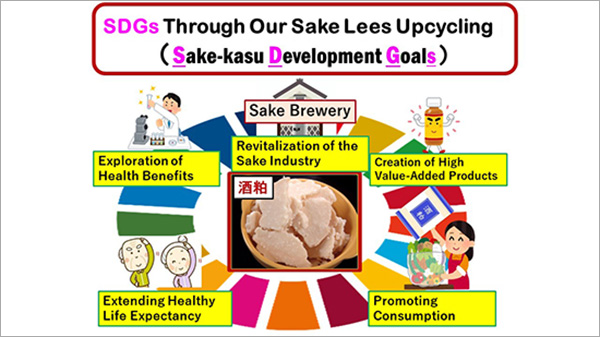 Upcycling sake lees holds great potential for improving quality of life and revitalizing local communities
Profile
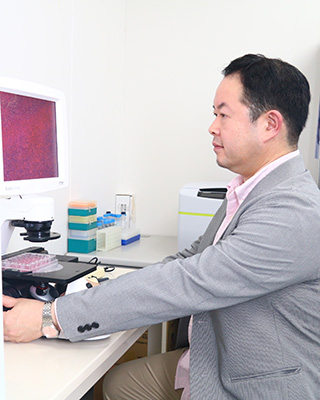
KAKIHARA Yoshito
Ph.D. (Medicine). His specialties are pharmacology and molecular biology. He studies the effects of various foods, including sake lees, on bone metabolism.
Beyond the University
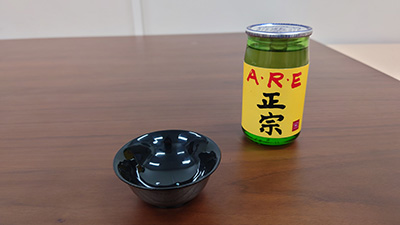
Dr. Kakihara has long enjoyed sake. Recently, he has become interested in how the taste of sake changes depending on the glass used. He says he would like to study this phenomenon as well.
*Article content and profile information are current as of January 2026.
Tags (Keywords)
Publication
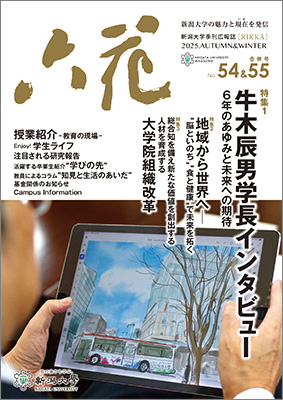
This article is also featured in Rikka, Niigata University’s quarterly public relations magazine, No.54/55.
Read other articles
-
 Faculty's Column (Early-Career) October 14, 2026
How Does Your Body Change With Breastfeeding? Looking Ahead to Women’s Long-Term Health
YAGYUUDA Noriko Assistant Professor, School of Health Sciences, Faculty of Medicine -
 Research (Rikka) September 29, 2026
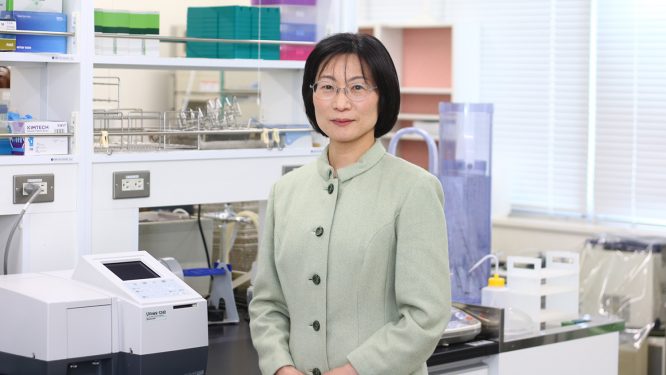
Research on Local Ingredients: Aiming to Uncover Health Benefits and Quantify Flavor
YAMAGUCHI Tomoko Professor, Faculty of Education & Faculty of Agriculture -
 Faculty's Column (Rikka) September 29, 2026
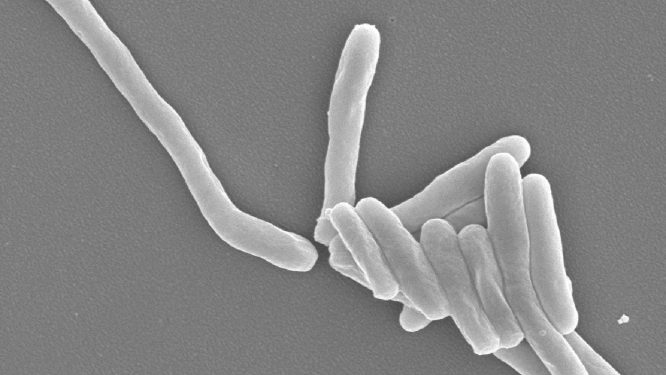
Mycobacterium Tuberculosis: Humanity’s Number 1 Killer both Past and Present
MATSUMOTO Sohkichi Professor, Graduate School of Medicine, Dentistry, and Health Sciences