

Election Law as “Political Law”
“Elections are the cornerstone of democracy.” I imagine many of you have heard or read this phrase before. At least in Japan, the Preamble to the Constitution begins with the words, “We, the Japanese people, acting through our duly elected representatives in the National Diet…,” thereby declaring the principle of popular sovereignty and the adoption of representative democracy based on elections. Thus, it is clear that the institution of elections is regarded as the foundation of democracy.
On the other hand, elections also serve as areas of struggle over political power. During elections, candidates mobilize every available resource to wage an “election battle” in order to secure a seat in parliament or become the head of a government office, while political parties do the same to expand their influence. In some cases, illegal acts may even be committed in an effort to win the battle. When people think of electoral struggles, many likely envision this fierce competition for votes among candidates and political parties. However, there is another aspect worth noting: the struggle over the design and content of election law.
Election laws are statutes that establishes the fundamental principles, procedures, rules of competition, and penalties related to elections. This means that changes to election laws alter the very nature of elections; thus, election laws exert significant influence on politics. Furthermore, election laws have distinctive feature in the legislative process in that lawmakers, those who are themselves participants in elections, take the lead in amending the laws. It may seem natural for members of parliament to amend election laws as they are members of the legislative body, however this amounts to nothing less than allowing the players of the election game to change the rules themselves. This is precisely why, when amending the election laws, lawmakers and political parties often engage in both competitive and cooperative dynamics to maximize their respective interests. Because of this inherent nature, election law is known as a form of “political law.”
My research has focused on the nature of election law as political law. Using Japan’s current Public Offices Election Act as my primary subject, I have sought to elucidate the actual process of election law reform and the dynamics of interaction among the various actors involved in such reforms. Although the Public Offices Election Act was enacted in 1950, even if one counts only major amendments, it has been amended more than sixty times. Using quantitative methods, I have analyzed the processes through which these numerous amendments were enacted, as well as the trends observable in those processes by period and field. Additionally, I have examined the activities and interrelationships of various actors—including legislators, political parties, administrative agencies, advisory councils, and the mass media—in several specific cases, employing a variety of approaches. I intend to continue building upon these analyses and examinations, while also taking comparative analysis with other countries into account, in order to shed light on the various aspects of power struggles surrounding elections.
Profile
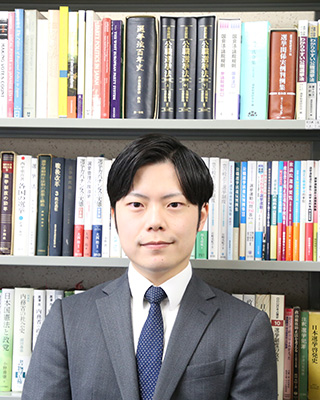
MASUDA Takanari
Ph.D. (Political Science). Specializes in political processes and electoral systems. His research focuses on the political processes surrounding election law reform, with a particular emphasis on the Public Offices Election Act. Prior to his current appointment, he served as an Assistant Professor in the Department of Political Science at the Faculty of Law, Doshisha University. He has been an Associate Professor at the Faculty of Law, Niigata University, since April 2022.
*Article content and profile information are current as of May 2026.
Tags (Keywords)
Read other articles
-
 Faculty's Column (Early-Career) October 14, 2026
How Does Your Body Change With Breastfeeding? Looking Ahead to Women’s Long-Term Health
YAGYUUDA Noriko Assistant Professor, School of Health Sciences, Faculty of Medicine -
 Research (Rikka) September 29, 2026
Research on Local Ingredients: Aiming to Uncover Health Benefits and Quantify Flavor
YAMAGUCHI Tomoko Professor, Faculty of Education & Faculty of Agriculture -
 Faculty's Column (Rikka) September 29, 2026
Mycobacterium Tuberculosis: Humanity’s Number 1 Killer both Past and Present
MATSUMOTO Sohkichi Professor, Graduate School of Medicine, Dentistry, and Health Sciences