
Elucidating the Foundations and Neural Bases of Social Intelligence in Fish: Exploring Cognition in Fish Through Its Relationship to Ecology
Unraveling the intelligence and evolutionary factors of aquatic animals to change people’s perceptions of animals.
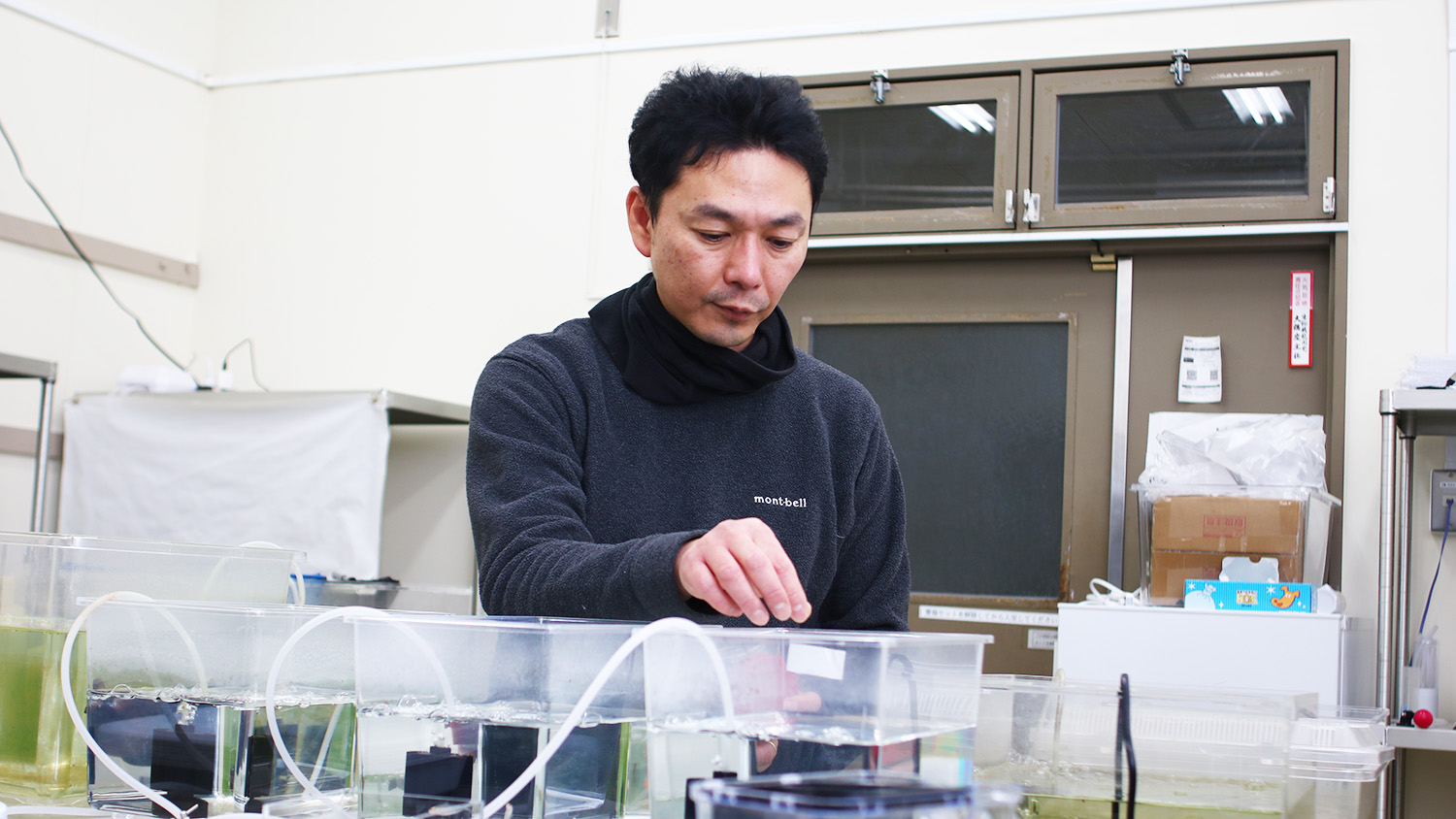
Animal “intelligence” has traditionally been considered unique to terrestrial vertebrates, including humans, and there is a common perception that it is difficult to associate “fish” with “intelligence.” However, in recent years, a series of discoveries regarding the cognitive abilities of aquatic animals has been challenging this perception. Associate Professor Takahashi conducts research to explore the intelligence of aquatic animals from the field of cognitive evolutionary ecology, which integrates multiple disciplines such as behavioral ecology and comparative cognitive science.
“The theory posits that human intelligence developed and evolved as the brain adapted to complex social environments. This theory is known as the ‘Social Intelligence Hypothesis,’ however, as the formation of societies and the establishment of bonds between individuals also exist in aquatic environments, it is possible that aquatic animals possess the corresponding intelligence and intelligent behaviors. We focus my research on the social, cognition, and brain of fish, and am working to identify cognitive abilities in fish.”
Various experiments were conducted using methods based on fish ecology. Drawing inspiration from fish behavior involving their fixation on hidden food, the researchers investigated whether fish are capable of performing calculations.
"Using the predatory fish known as Oscar cichlids, we are investigating whether they leave the area because they think there is no more food after they eat a piece of food that was temporarily hidden and then shown again, and what behavior they exhibit when multiple pieces of food are presented. We are also considering more in-depth approaches, such as altering rearing conditions or utilizing schooling fish. We plan to continue conducting experiments and verifications to clarify the cognition of fish, while also reexamining the intelligence of animals in general.”
In addition, Associate Professor Takahashi conducts numerous other studies in tandem, such as experiments on “fish cognition regarding fishing” and “whether fish have “social needs”,” with the aim of understanding fish intelligence, and their thoughts, from every possible angle.
“Cognitive evolutionary ecology—which seeks to understand animal intelligence and explore the origins of the intelligence that sustains complex societies—is expected to contribute to many fields, including behavioral ecology, so we plan to continue our research from multiple angles. On that basis, I am personally focusing my efforts on research centered on the mind. In experiments, fish often exhibit behaviors and actions similar to those of humans. By unraveling the mechanisms of intelligent behavior and discovering new psychological principles through these human-like aspects, I hope to apply these insights to advancements in medicine, genetics, and artificial intelligence.”
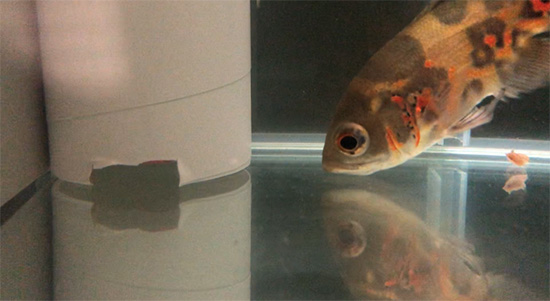 A scene from an experiment using Oscar. If the fish can “understand” the bait that has fled into its hiding place,
we might be able to investigate the fish’s computational abilities.
Profile
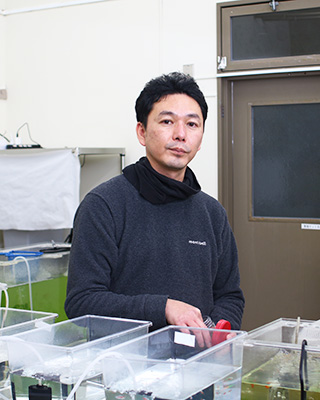
TAKAHASHI Kohji
Ph.D. (Agriculture). Specializes in fish psychology. He conducts research on the psychology and cognition of aquatic animals, with a focus on fish. He approaches his research from various angles, including behavioral ecology and fisheries science. His book is titled “If Humans Have Hearts, So Do Fish: A Caught Fish Never Forgets.”
Beyond the University
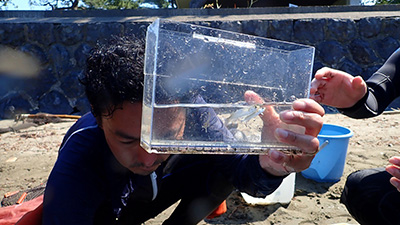
Associate Professor Takahashi, who keeps fish at home and conducts experiments there, says that coming up with research plans is his favorite part of the day. His intellectual curiosity knows no bounds.
*Article content and profile information are current as of May 2026.
Tags (Keywords)
- #BehavioralEcology
- #CognitiveEvolutionaryEcology
- #ComparativeCognitiveScience
- #Fish
- #HigherCognition
- #Oscar
- #SocialIntelligenceHypothesis
Publication
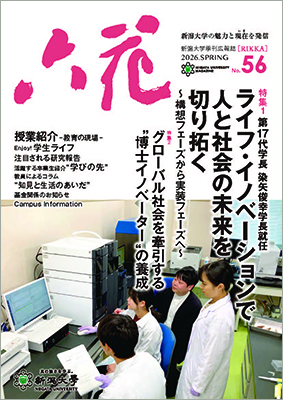
This article is also featured in Rikka, Niigata University’s quarterly public relations magazine, No.56.
Read other articles
-
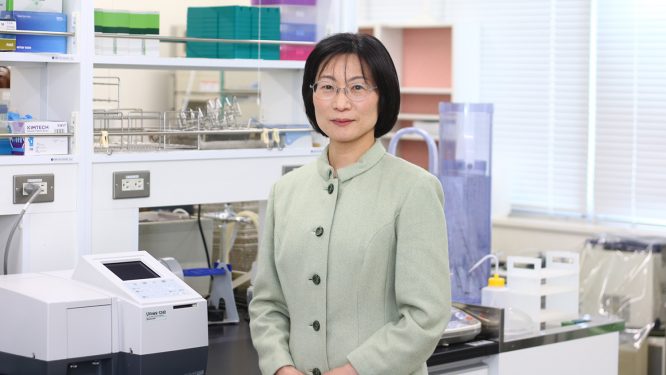 Research (Rikka) September 29, 2026
Research on Local Ingredients: Aiming to Uncover Health Benefits and Quantify Flavor
YAMAGUCHI Tomoko Professor, Faculty of Education & Faculty of Agriculture -
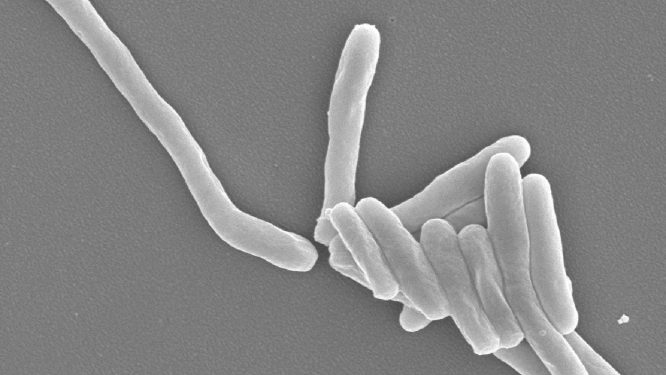 Faculty's Column (Rikka) September 29, 2026
Mycobacterium Tuberculosis: Humanity’s Number 1 Killer both Past and Present
MATSUMOTO Sohkichi Professor, Graduate School of Medicine, Dentistry, and Health Sciences -
 Faculty's Column (Early-Career) August 28, 2026
Understanding Human Movement from a Neuromuscular Perspective Using In Vivo Imaging
KUNIMASA Yoko Assistant Professor, Faculty of Education & Faculty of Engineering