

What Determines the Severity of Infectious Diseases?
Using Autoantibodies Against Type I Interferon as a Clue
Even when infected with the same virus, some people recover with only mild symptoms, while others could have symptoms that become life-threatening. What accounts for this difference?
This is one of the themes of the research I am working on. In the early stages of the novel coronavirus (COVID-19) pandemic, it was difficult to determine who would develop severe symptoms, leading to significant confusion in healthcare settings. Eventually, it became clear that advanced age, obesity, and underlying medical conditions were risk factors for severe illness, and this information was used to help prioritize prevention and treatment efforts.
The severity of an infectious disease depends on both the virus or other nature of the pathogen and the condition of the infected person’s body (the host). My research focuses on the body’s innate defense mechanisms against infection; the host’s immune system.
In particular, I am focusing on a substance called type I interferon and the autoantibodies that interfere with its function. Type I interferon is a signaling molecule called a cytokine that alerts surrounding cells to danger and triggers a defensive response in the early stages of a viral invasion. It is known that type I interferon plays a crucial role in the immune defense mechanisms during the early stages of COVID-19 infection. On the other hand, while antibodies are intended to protect the body from viruses and other pathogens, the body can sometimes produce autoantibodies that react against its own components. It is believed that the presence of autoantibodies that interfere with the action of type I interferon weakens the body’s ability to suppress viral replication.
In international studies conducted early in the pandemic, these autoantibodies were detected in approximately 10% of patients with life-threatening, severe COVID-19. Research conducted at the Department of Immunology at Chiba University, where I was affiliated at the time, also confirmed their presence in about 11% of Japanese patients who required oxygen therapy or other supportive care. Subsequently, we continued our research at Niigata University and reported that these autoantibodies were still being detected in some severely ill patients even after the Omicron variant became the dominant strain. It is known that these autoantibodies are present even before infection, and the proportion of people who possess them increases with age. This finding may help explain, in part, why older adults are more prone to developing severe COVID-19. However, it is possible that not all individuals with these autoantibodies will necessarily develop severe disease, so further investigation is needed to determine the specific conditions under which they lead to severe illness.
So, is COVID-19 the only condition in which these autoantibodies play a significant role? While the presence of these antibodies in some diseases has long been known, research has advanced significantly in the wake of the pandemic, and it has become clear that they are also involved in the development of severe cases of other viral infections, such as influenza. The COVID-19 pandemic was an incredibly difficult time for many people, including us healthcare professionals. We certainly do not want another pandemic to occur. Nevertheless, it is important to prepare for an outbreak that may occur someday. Could these autoantibodies serve as a clue to quickly identify people at high risk of severe illness and lead to prevention or treatment? We intend to continue our research so that we can apply the insights gained from that experience to the future of healthcare.
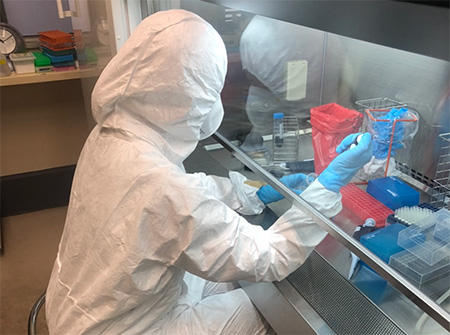 Research Photo: A scene from the early days of our research on the novel coronavirus.
The photo shows the author.
Profile
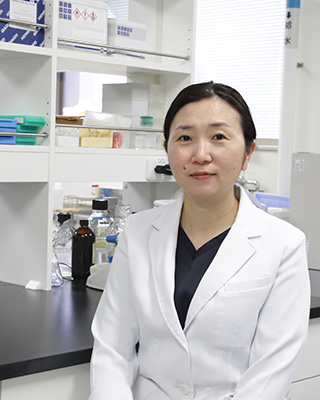
AOKI Ami
Ph.D. (Medicine). Specializes in respiratory medicine. Has been affiliated with the Department of Respiratory Medicine and Infectious Diseases at Niigata University since 2013 and completed her residency at hospitals in Niigata Prefecture. After serving as a Specially Appointed Assistant Professor in the Department of Immunology at Chiba University, she has been an Assistant Professor at Niigata University School of Medicine’s Medical Education Center, since 2021. In addition to providing clinical care as a pulmonologist, she is involved in research, education, and efforts to promote diversity in the medical field.
*Article content and profile information are current as of November 2026.
Tags (Keywords)
Read other articles
-
 Faculty's Column (Early-Career) October 14, 2026
How Does Your Body Change With Breastfeeding? Looking Ahead to Women’s Long-Term Health
YAGYUUDA Noriko Assistant Professor, School of Health Sciences, Faculty of Medicine -
 Research (Rikka) September 29, 2026
Research on Local Ingredients: Aiming to Uncover Health Benefits and Quantify Flavor
YAMAGUCHI Tomoko Professor, Faculty of Education & Faculty of Agriculture -
 Faculty's Column (Rikka) September 29, 2026
Mycobacterium Tuberculosis: Humanity’s Number 1 Killer both Past and Present
MATSUMOTO Sohkichi Professor, Graduate School of Medicine, Dentistry, and Health Sciences