Niigata University Discusses Strategic Partnerships in Research and Doctoral Education with Three Australian Universities
October 27, 2026
Toward New Opportunities for International Collaborative Research with Curtin, Adelaide and Macquarie Universities
From October 12 to 14, President Toshiyuki Someya visited Curtin University, Adelaide University and Macquarie University in Australia. During the visits, he met with university leaders and researchers to exchange views on international collaborative research, doctoral education, student and researcher mobility, and the development of research hubs.
All three universities have strong international research profiles. The purpose of the visits was not simply to make courtesy visits or promote academic exchange, but to explore how the strength of each university could be combined with those of Niigata University to develop concrete collaborative research projects and initiatives in doctoral education.
At Curtin University, discussions focused on further strengthening collaboration in earth and environmental sciences through S-EARTH, a student exchange program involving universities in India, Australia and Sri Lanka, while also exploring new opportunities in life and health sciences, including neuroscience. The discussions highlighted the potential to expand the established partnership in earth and environmental sciences into a broader range of research fields.
At Adelaide University, the two institutions identified opportunities for collaborative research across a range of fields, including earth sciences, agriculture, food and wine. In particular, discussions have begun on developing a Research & Collaboration Memorandum of Understanding (MoU) that would bring together research collaboration, doctoral education, student and researcher exchange, and joint applications for external research funding. The MoU is expected to provide a foundation for more structured collaboration between the two universities.
At Macquarie University, active collaborative research is already underway in swallowing research and neuroscience. During the visit, discussions focused on building on this existing collaboration and developing a long-term partnership over the next decade through exchanges of early-career researchers and doctoral students, joint supervision, and cotutelle arrangements, under which doctoral candidates are jointly supervised by the two universities.
One of the most important outcomes of the visits was that Niigata University’s concept of the “circulation of knowledge” resonated strongly with all three partner universities. This concept emphasizes creating knowledge through research, developing people through the research process, and generating new value by connecting people and knowledge with society. It also involves bringing new questions that emerge through engagement with society back into research and education, thereby sustaining a continuous cycle of knowledge creation, human development, and societal engagement. Despite differences in their institutional structures and research priorities, all three universities expressed strong support for this vision.
The discussions also reaffirmed that establishing connections with overseas universities should not be an end in itself. Rather, the key is to combine the distinctive research strengths of each institution to develop new research themes and create new value. Areas of potential collaboration include earth and environmental sciences, brain and life sciences, food and health, agriculture, medicine and dentistry.
Going forward, Niigata University will seek to expand its collaboration with Curtin University from earth and environmental sciences into life and health sciences. With Adelaide University, the focus will be on developing collaborative research and joint PhD supervision under the proposed Research & Collaboration MoU. With Macquarie University, Niigata University will build on existing collaborative research in swallowing research and neuroscience to develop a long-term partnership.
These partnerships are intended to go beyond institutional exchange. Through collaborative research, cotutelle arrangements, joint supervision, and exchanges of researchers and doctoral students, early-career researchers and graduate students will have opportunities to participate in international research environments and develop new research themes and build international research networks.
Niigata University will continue to deepen its relationships with the three Australian universities and translate these partnerships into tangible outcomes that strengthen its research capabilities and advance doctoral education.
Curtin University: Expanding Collaboration from Earth and Environmental Sciences to Life and Health Sciences
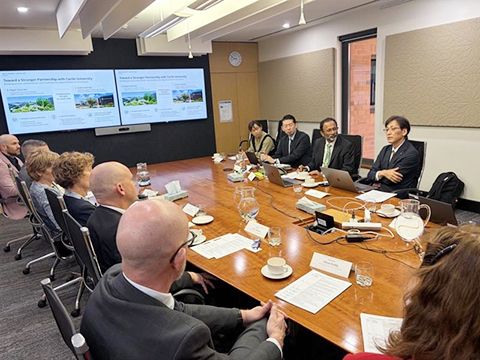 Meeting with the Deputy Vice-Chancellor for Research and other university representatives
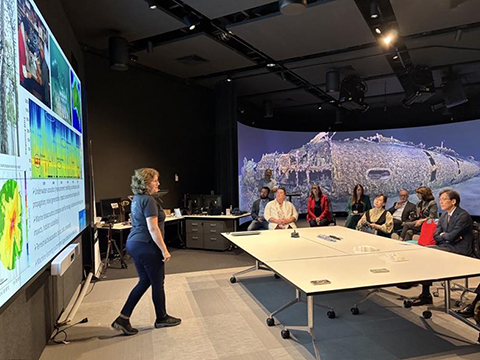 President Someya (right) listens to a presentation on research findings by researchers from the Faculty of Science and Engineering.
Adelaide University: Developing New Collaborative Research Across Earth Sciences, Agriculture and Food
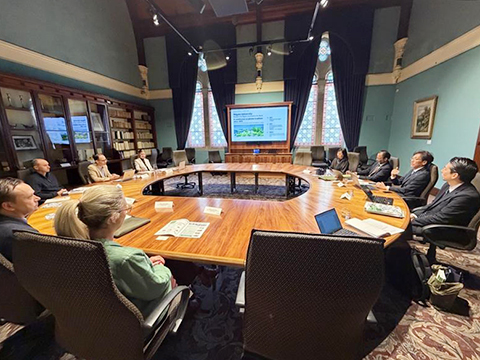 Exchanging views with academic leaders in the sciences
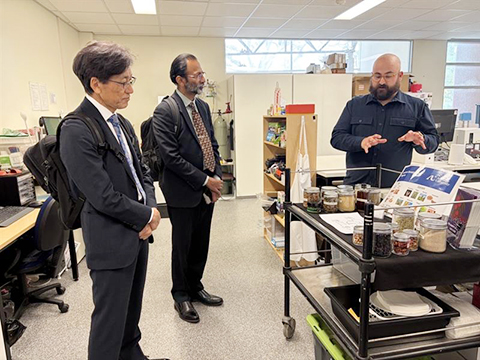 Visiting research facilities in agriculture, food and wine
Macquarie University: Building on Existing Collaborative Research to Develop a Partnership for the Next Decade
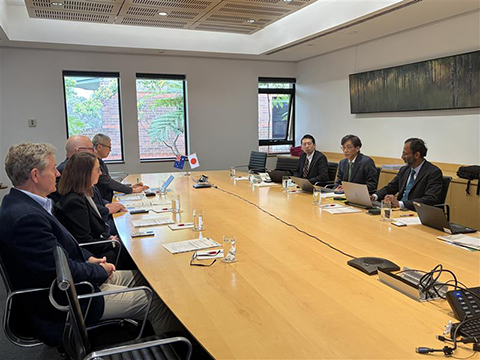 Meeting with Vice-Chancellor S. Bruce Dowton and other university representatives
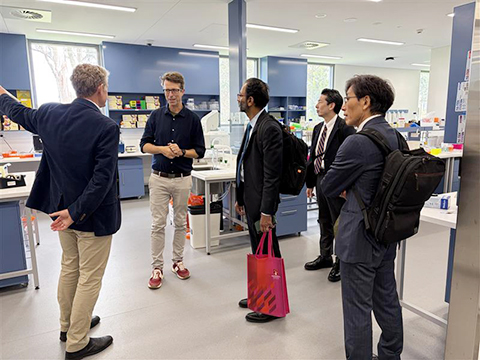 Visiting research facilities in the Department of Applied Biosciences
Contact:
Niigata University Office of International Partnerships
E-mail: intl@cc.niigata-u.ac.jp