
Profile and Message
 Profile
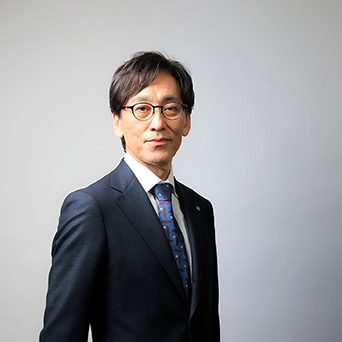
SOMEYA Toshiyuki, M.D., Ph.D.
Professor SOMEYA Toshiyuki is the 17th president of Niigata University. Born in Oita Prefecture in 1958, he earned his M.D. from the University of Tokyo in 1983 and completed his Ph.D. at Shiga University of Medical Science in 1990. He worked at the University of Tokyo and Shiga University of Medical Science before joining Niigata University in 1998. Since then, he has worked extensively in medical education, research, and university administration. His academic field is psychiatry.
Career History
・ July 1986: Assistant Professor, Shiga University of Medical Science
・ April 1993: Lecturer, Health Administration Center, Shiga University of Medical Science
・ January 1998: Professor, Faculty of Medicine, Niigata University
・ February 2018: Head of the Institute of Medicine and Dentistry and Dean of the Faculty of Medicine, Niigata University
・ February 2024: Executive Vice President for Global Affairs, Niigata University
・ February 2026: President, Niigata University
President's Message
Opening New Frontiers for People and Society through Life Innovation
— From Vision to Implementation —
Our world today is confronting a range of complex, interconnected challenges: a declining birthrate, an aging population, serious environmental issues, increasingly severe natural disasters, and ongoing uncertainty in global affairs. Living, in this sense, goes far beyond simply being alive. It encompasses our daily routines, the course of our lives, and the choices we make about the future within the society and on the planet that we are part of. I believe, universities must engage with the full dimensions of human life, and through both academic work and practical action, harness the power of knowledge to help shape the future of people and society.
In 2021, Niigata University formulated Vision 2030, upholding the mission of becoming a front-runner in future life innovation. Since then, we have reexamined our approaches to research, education, and contributions to society. At the heart of this effort is the pursuit of knowledge that brings together life itself, daily living, individual life paths, and the environments that sustain them, treating them as part of a single, connected whole. While honoring this vision, we will move beyond concepts by turning ideas into action and embedding their outcomes in society.
Based in Niigata City, the only ordinance-designated city on the Sea of Japan coast of Honshu, the university has grown within a rich natural environment and a history marked by openness to the wider world. The Echigo Plain, nourished by the Shinano and Agano rivers, together with a diverse landscape where the sea, mountains, and rural landscapes coexist in close proximity, have long supported local life and industry and have also underpinned the university’s pursuit of knowledge. Niigata’s history—first as a key stop along the Kitamaebune trade route and later as one of Japan’s five treaty ports opened to international commerce—helped shape the university into a center of knowledge linking the region with the world.
Niigata University traces its origins to a predecessor institution dating back some 150 years and was reorganized in 1949 as a national university under Japan’s postwar higher education system. Today, the university is home to about 13,000 students and 3,000 faculty and staff. As a comprehensive university, it encompasses 10 undergraduate faculties, five graduate schools, the Brain Research Institute, the Research Institute for Natural Hazards and Disaster Recovery, and the University Medical and Dental Hospital, through which it contributes to society in education, research, and medical care.
The University’s progress and wide range of activities have been guided by the principle we uphold: Autonomy and Creativity. This principle reflects our commitment to fostering independent thinking and action, as well as working across fields and roles to create new value. It also serves as the starting point for the educational and research reforms currently underway at the University.
The University is now at a major turning point in graduate education and research. By reorganizing its graduate programs, it is moving toward a more flexible and interdisciplinary framework for education and research. At the same time, through the Future-Leading and Advanced Graduate-schools (FLAGs) initiative - a MEXT program designed to create world-class graduate education hubs - the University has positioned doctoral education as central to institution-wide reform. Educating individuals who can work across disciplinary boundaries, collaborate with society to identify shared challenges, and lead their solutions is an essential mission for universities in the years ahead.
In research, the University is working to further strengthen its capabilities, with the Program for Forming Japan’s Peak Research Universities (J-PEAKS) serving as a key foundation. This MEXT program supports regional core universities as well as universities with strengths in specific research fields. Under this program, 25 universities across the country have been selected to form a new group of research institutions, complementing the Universities of International Research Excellence initiative, a designation given to universities that aim to rank among the world’s leading research universities. Niigata University is proud to be part of J-PEAKS. Looking ahead, a major task will be to connect the development of people and the outcomes of research with society, and to translate those outcomes into real-world application.
As its research capacity continues to advance, the university has steadily promoted co-creation and social implementation by applying the outcomes of research and education within local communities, including through regional innovation programs supported by the Cabinet Office. These efforts are made possible by a collaborative structure in which faculty members together with University Administrators (UAs) and professional administrative staff, who are responsible for shaping strategy and carrying it into practice. By bringing together diverse roles that combine specialized expertise with first-hand practical experience, the university is able to turn its vision into tangible change.
Niigata is a region blessed with a vibrant natural environment, along with abundant resources ranging from food and agriculture to water and the sea. At the same time, it faces significant challenges, including regional healthcare and disaster preparedness. Rooted in a place where opportunities and challenges exist side by side, Niigata University seeks to connect with the world and take on global issues—starting here in the region. This commitment lies at the core of the university’s mission.
Guided by this mission, Niigata University will work beyond disciplinary boundaries to support people and society, create knowledge that opens up the future, and ensure that its outcomes are put to use in society.
Through life innovation, we will shape the future of people and society.
To bring this vision into reality, the university will continue to move forward.
SOMEYA Toshiyuki, M.D., Ph.D.
President